My journey to becoming a therapist
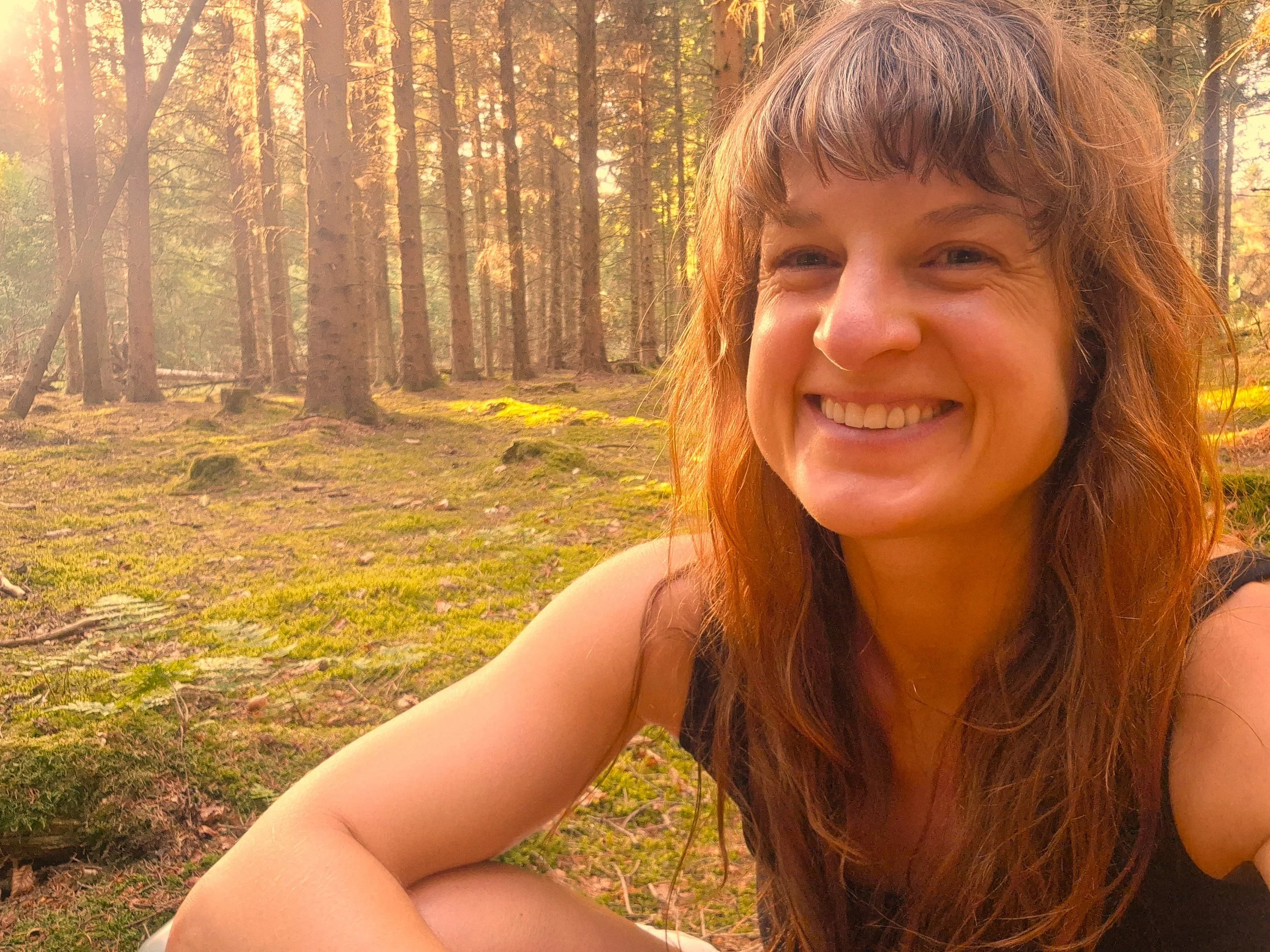
Hello,
I’m Natalie (she/her). My whole life I have felt drawn to understand and experience the depths of what it means to be human, alive, and connected. I have spent much of my life struggling with various forms of distress, and disconnection from myself and from others. Starting a personal psychotherapy journey was absolutely key for me finding my way towards a much greater sense of self-acceptance and capacity to relate authentically.
I felt so passionate about the enlivening impact psychotherapy had on my life that I chose to make a career change in my 30s and become a psychotherapist myself. Prior to this, I spent a decade working as a doctor in the NHS, with the latter years practicing as a psychiatrist. Whilst this profession equip me with lots of experience working with people in distress of various forms, and a sound knowledge of how the medical model of mental health works, I became disillusioned by the limits of this pathologising and non-relational approach to supporting people in distress.
Having worked with therapy clients since 2023, I am lost for words to express how honoured I feel to accompany individuals in their process.
my approach to therapy
I believe that therapy is inherently political, and I passionately hold the view that we cannot isolate the individual from the systems we exist within - whether that be family systems, or wider structural/societal systems. I proactively educate myself about systems of oppression and privilege, and I am continuously processing the impact of being a person who experiences both privilege and oppression. I welcome working with queer folk, gender queer folk, BIPOC, neurodivergent folk, and disabled folk. I personally identify as queer, neurodivergent, feminist, anticolonial and I am pro fat liberation.
I see therapy as one place we can start to rewrite the stories handed to us by living in capitalist, patriarchal and colonial systems, as well as those handed to us by our families. By learning to better connect to and trust our felt sense, body, intuition, instinct, and rhythm, we can learn to live more from the inside out, rather than contorting ourselves into shapes that serve to preserve the comfort of people in power at the cost of our own aliveness. Identifying conditioning and the impact of trauma - personal, societal and intergenerational - can help us to access more choice in our lives and relationships.
I believe we are fundamentally social beings primed to seek out relationships, and that we thrive in loving, secure relational environments. I believe our deepest wounds were born in relationships and as such, perhaps paradoxically, relationships are also the key to working through these wounds. I have trained in both person-centred and psychodynamic therapies, modalities which focus therapy around the relationship between client and therapist. It is my experience that this professional relationship has huge potential to help us understand ourselves and our relational patterns, empowering us to move into new ways of relating to ourselves and others in ways which better serve our wellbeing.
The mainstream medical system generally pathologises distressing experiences by calling them ‘symptoms’ or ‘illness’, and tries to eradicate this distress by offering medication. Whilst I believe medication can be a helpful part of working through distress, I see a limitation in this purely biological approach which leaves the psycho-socio-spiritual root causes of distress unexplored. Pathologising distress by calling it illness also insidiously communicates an unhelpful message that distressing internal experiences mean there is something ‘wrong’ with us.
I find this pathologising framing of distress to be unhelpful as it sets us up to aim to ‘get rid of’ ‘symptoms’. I hold the alternative view that ‘symptoms’ are the cries of emerging parts of ourselves calling out to be listened to, understood, loved and accepted. My view is that ‘symptoms’ surface as our body’s clever way of communicating that a part of us deeply needs our attention, and arise because we are ready and capable of getting closer to these wounded parts. We all have shadow parts, and I believe that wellbeing stems from building awareness of and learning to compassionately embrace these uncomfortable shadow parts of our experience, rather than labelling them as ‘bad’ and trying to get rid of them.
As reflected in the poem on my homepage, I believe that everyone is already whole and has both light and darkness within them, as I have both light and darkness within me. As your therapist, I would aim to act as a sensitive and compassionate companion as you walk yourself through the unknown and darker territories of your being, on your journey home. I trust deeply in your capacity to do so.
My approach to working with clients also incorporates knowledge and experience I have acquired from Buddhist meditation, non-violent communication, circling and multiple embodiment practices including 5 rhythms dance, contact improvisation, and yoga.
On the side of my practice I have run women’s circles and events that aim to facilitate a remembering of how we are cyclical beings, interconnected with seasonal and moon cycles. My chosen medicines for these events include ritual, the elements, nature-connection, animism, folk stories, dance, mediation, breathwork, art, song, and community sharing.